Adding an amp to an amplified or premium factory system
How to add power and retain all the features

If your vehicle's factory stereo has cool features but sounds bad, replacing the speakers and adding an amplifier are the best ways to improve the sound quality. Speakers are easy. Amplifiers are more difficult.
In this article, we present three different scenarios describing how to add an amplifier to a vehicle that has a factory amplifier:
- Bypassing the factory amp in a full-range analog system.
- Using an aftermarket amp with signal-summing inputs for a crossed-over factory system.
- Using a vehicle-specific interface device and harness for a digitally controlled system.
We'll explain what all of this means as we go.
Upgrading your vehicle's premium stereo system
The factory stereo system in your car does everything you could possibly want it to do — except sound good. Replacing the speakers and adding an amplifier is the best way to upgrade sound quality, even for so-called premium systems. Replacing speakers is a fairly straight-forward operation, covered in our How to install speakers guide. We also show how you can add a subwoofer to a factory stereo, if that's all you want.
When upgrading the power of an amplified factory system, however, technical issues often arise that complicate the installation of an aftermarket amplifier — like factory stereos with digitally controlled amps that power different speakers with different signals in different situations.
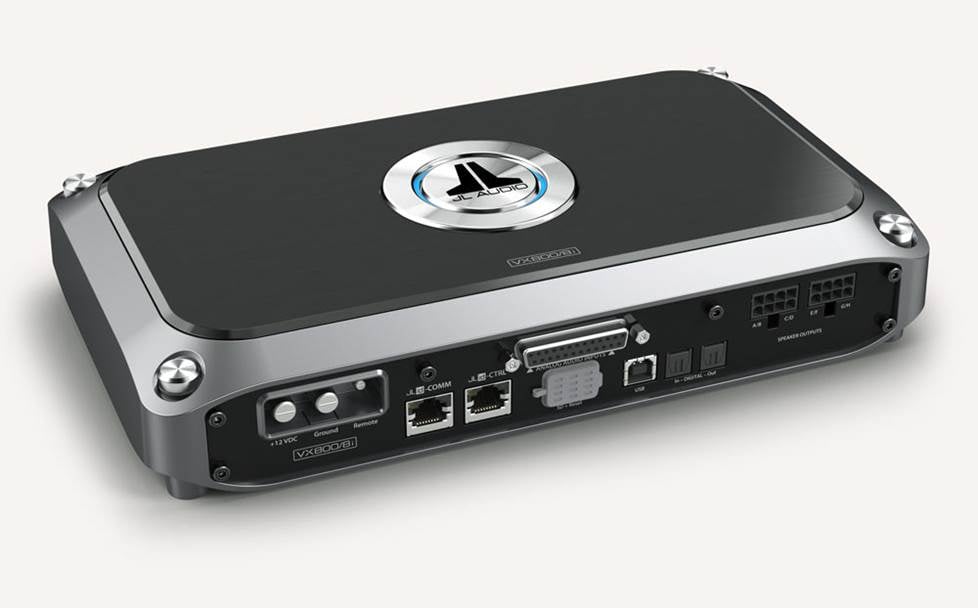
JL Audio VX800/8i eight-channel amp with digital signal processing
Keeping the features you like
For example: many cars feature Bluetooth® communication and warning chimes playing out of a center channel speaker while lowering the volume or muting the other speakers. In order to retain those features, the new amplifier must duplicate whatever the factory amp was doing.
One way to do this is to use the factory amp's processed, mixed, and powered outputs for your aftermarket system's inputs. Another method utilizes the factory system's digital software controls to incorporate your new amp into the system, so it'll do just what the factory amp did, only better.
And in some cases, the factory amp may have to remain in position, and a signal-summing amp connection or a digitally controlled interface device may be required for a successful aftermarket amplifier installation.
In the sections below, we'll discuss what's going on in each scenario and how to work with it. If it gets confusing, don't worry. You can always call us and our Crutchfield Advisors will let you know what you'll need for your vehicle.
Scenario 1 — If you're lucky, the factory system is all analog
In rare situations, you may be able to simply replace your vehicle's factory amp with a new one. If there are no digital connections between the radio and the amp, and the amp's full-range analog input signals respond to the radio's volume control, you can remove or bypass the factory amp and replace it with your own aftermarket amp.
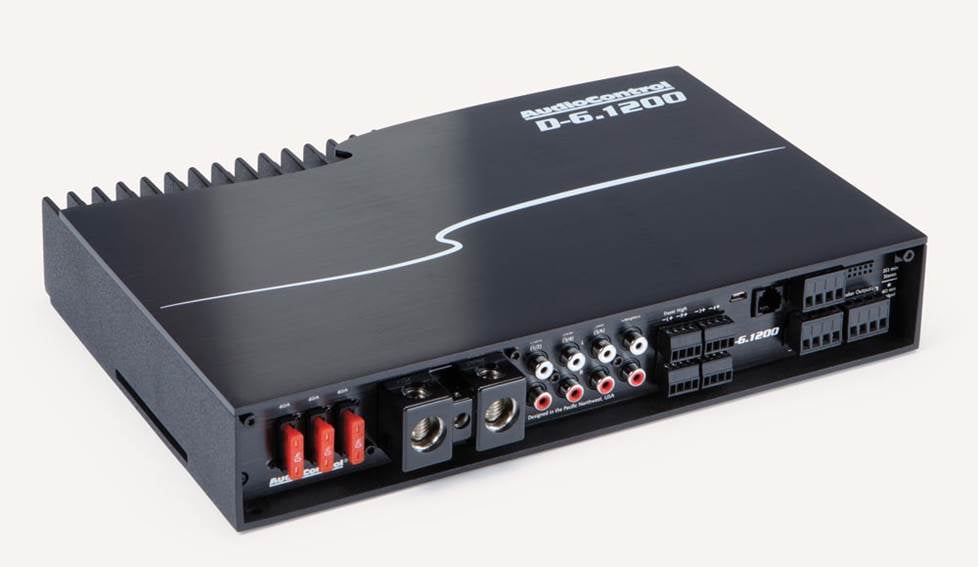
The AudioControl D-6.1200 six-channel amp with assignable high-level inputs is a great choice for a factory system upgrade.
How can I tell if it's an analog system?
Typically, you'll only find such all-analog factory amps when there are only four channels in the whole system. (Counting a factory component set consisting of a tweeter and a woofer as one speaker.) The amp will have four pairs of wires (eight total) going to its inputs, and the same for its outputs.
You can tell for sure by probing each wire pair (usually a colored wire plus the same-color wire with a stripe, but factory wires can be random colors) using a signal generator and sensor with a speaker or a real-time analyzer (RTA) to identify each source signal and each speaker. Unfortunately, most people don't have access to that kind of test gear, so listening carefully will be the best tool to use. For instance, touching and removing a speaker wire pair to and from the poles of a small battery will make a popping noise that you can track down.
How do I replace the factory amplifier?
After removing or bypassing the factory amp, you can use its input wires, which carry the analog output signals from the factory radio, for your aftermarket amplifier's inputs. Then, you can connect the factory amp's output wires to your new amp's outputs. This will send the signal (music) on to the speakers through the factory vehicle wiring.
You can do this by connecting the factory amp harness wires directly to your amp, or you may find a vehicle-specific amplifier bypass harness that'll do the job without cutting any wires or removing factory plugs. If you do remove the factory wiring plugs, you will want to save them, with useful lengths of wire attached, so you can return the system to stock if you choose to un-install your amp upgrade
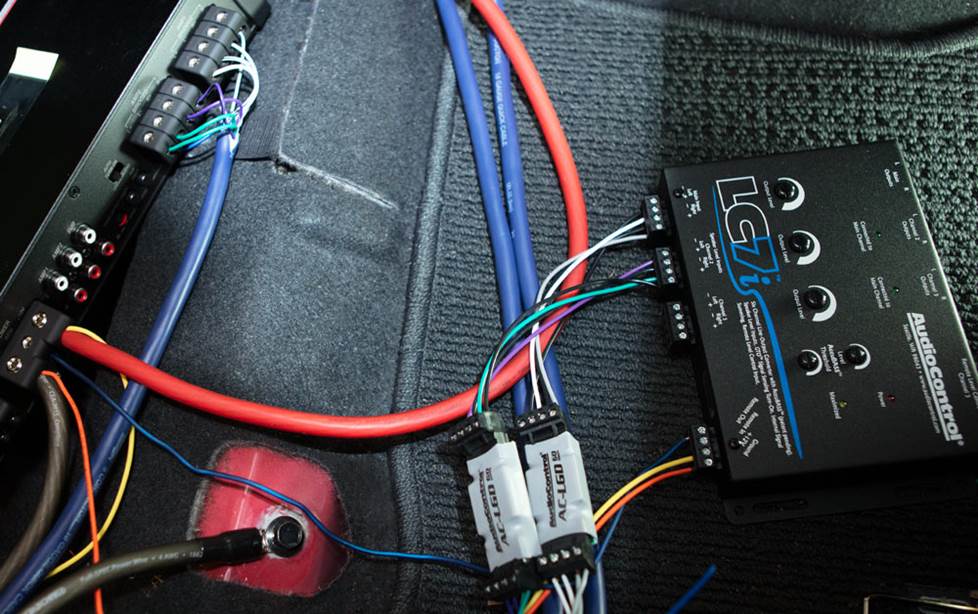
This installation-in-progress photo shows an Audio Control LC7i line output converter using two load-generating devices on its high-level inputs.
What do I need to do it?
Your aftermarket amplifier must have speaker-level inputs capable of handling the radio's output level, or you'll need line output converters (LOCs) to level-match the amp's inputs to the radio's outputs. Another issue is that without its normal output connections, the factory radio may shut down or show an error code. If this is the case, you'll need a load-generating device on each speaker channel.
Most of the time, our Advisors can let you know in advance if these items are needed, so give us a call before you get your new amplifier. After you get an amp, our Tech Support team can help with any issues. Learn more in our article about using line output converters and load generating devices in a factory system.
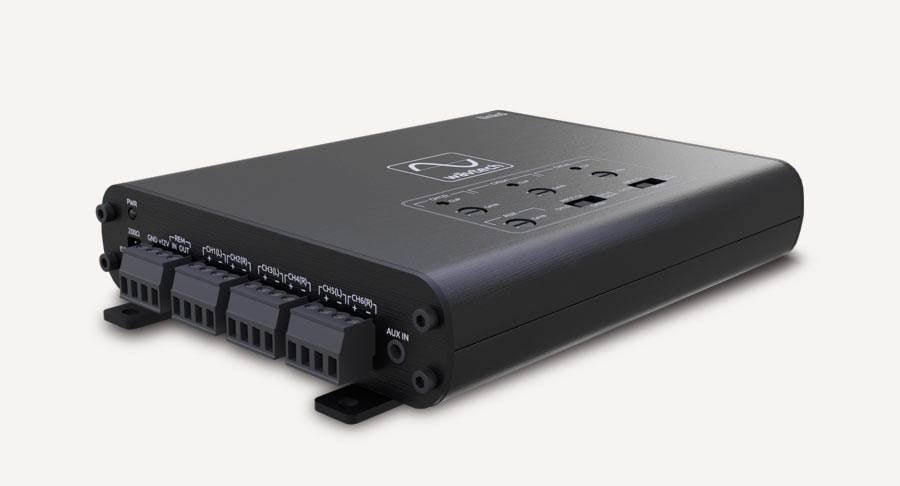
Wavtech link6 six-channel line output converter.
Scenario 2 — When there are highs, mids, and lows on separate channels
This scenario is pretty common these days. Whether your factory amp has all-analog or digitally controlled inputs, you can use its powered output signals for your aftermarket amp's inputs. This way, each channel of your new amp will play whatever the old amp channel was playing.
A common problem with this method, however, is that the output from the factory amp consists of processed, crossed-over signals. Each channel has a different high-, mid-, or low-frequency range of signals. For example: your tweeters will play high-frequency notes like cymbals, the mid-range door speakers will play vocals, guitars, and keyboards best, the rear speakers may play the full range of sound, while the subwoofer channel plays only low-frequency bass notes.
The solution: Signal summing and matrix mixing
A great way to handle this situation is to combine the signals of the different factory channels to form one full-range signal. Then you can process and amplify that signal any way you want, to make it sound best to you. To do that, you'll need to use an amplifier or digital signal processor that features high-level inputs and the ability to re-route and mix input and output signals.
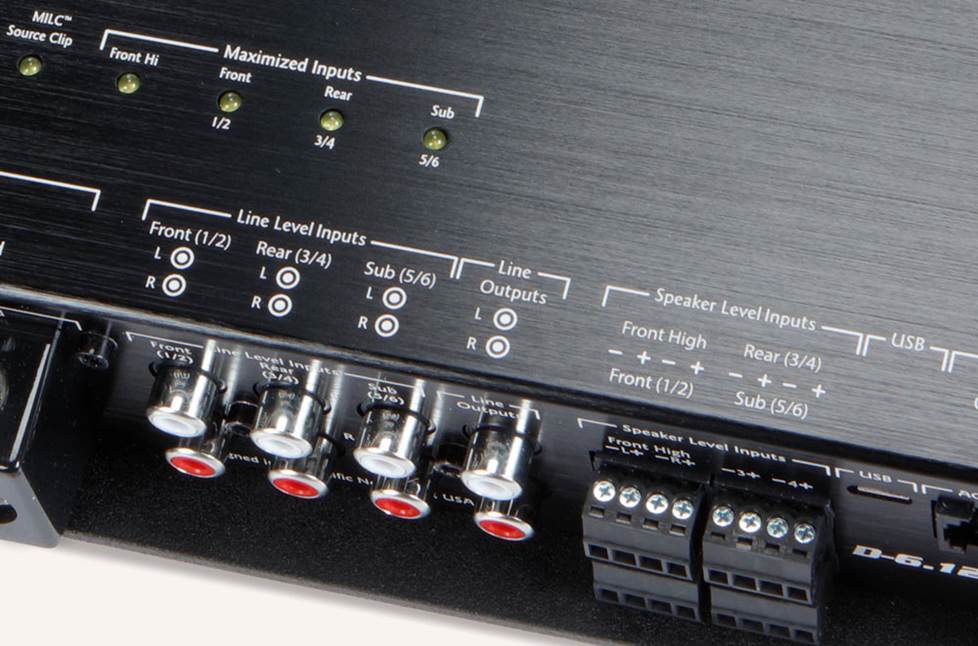
AudioControl's D6.1200 amp can combine high-frequency, midrange, full-range, and subwoofer speaker-level inputs to form a unified signal to amplify.
What do I need to do it?
Some devices, like Wavtech line output converters, allow you to combine, mix, and balance input signals automatically or by using a wired remote control. Other devices, like JL Audio digital processors and VXi Series amplifiers and AudioControl D Series amps and processors, use software control apps to mix and assign signals as well as control the overall sound quality. The interactive graphical user interface controls for these devices are often beautiful, comprehensive, and complicated.
Read this installation story to see how we handled one of these factory systems.
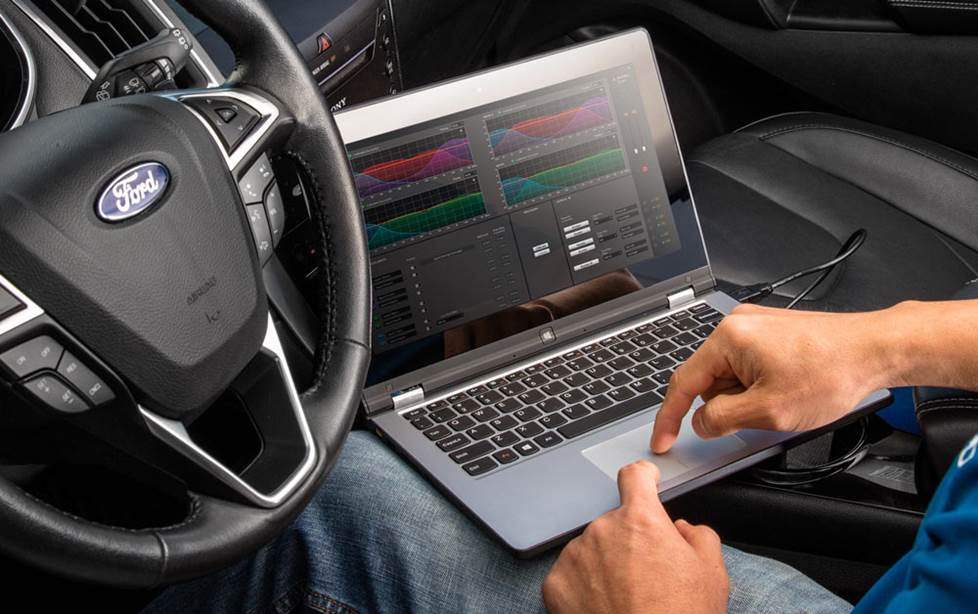
JL Audio's TüN processor graphical interface showing assignments, EQ, and more
What to do when that doesn't work right
In some vehicles, after summing and amplifying the signals from the factory amp, you may find your speakers playing with weird frequency responses and equalization curves meant to protect cheap factory speakers. Also, your vehicle's warning chimes and voice prompts may be too loud or too soft, or some other audio functions like automatic noise control (ANC) and bass roll-off just don't behave or sound right.
In these cases, you'll need an interface device that understands all the vehicle's digital commands and translates them for your aftermarket amp to obey and play correctly.
Scenario 3 — Vehicle-specific all-features solutions
The best way to add a new amplifier to your car is to use a vehicle-specific interface device and harness designed for adding amplification to a factory system. This will allow you to integrate into the factory stereo and get clean, full-range, and flat (unequalized) input signals for your aftermarket amp, that will work and sound like they're supposed to.
What do I need to do it?
Products that will help you add an amp include:
- iDatalink Maestro AR amplifier replacement module
- Rockford Fosgate DSR1 digital signal processor with built-in iDatalink Maestro AR module
- PAC AmpPro AP4 vehicle-specific aftermarket interface modules
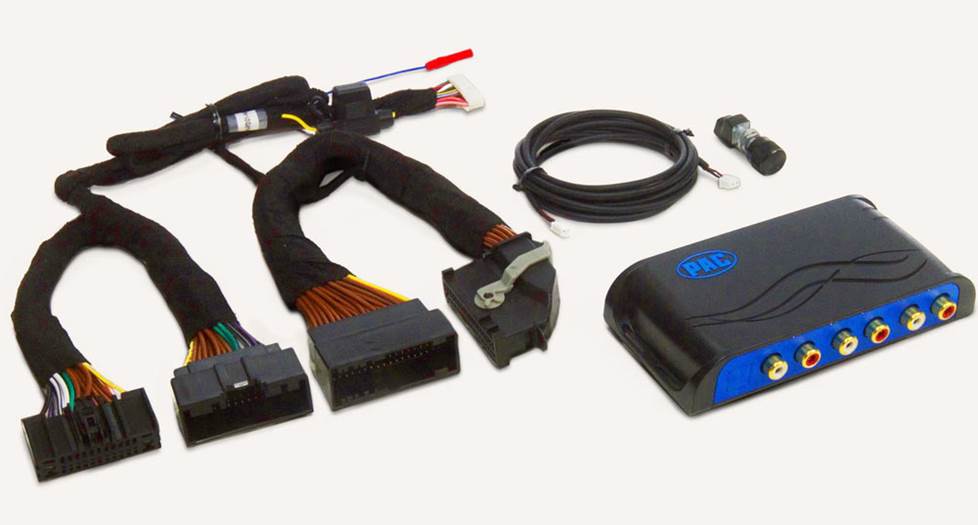
PAC AmpPro AP4 aftermarket interface module and harness for select 2012-up Ford vehicles
These devices work with vehicle-specific harnesses, usually sold separately, that let you install your amp upgrade with minimal or no wire-cutting or splicing required. Some interface modules require firmware updating and flashing via an internet connection to the manufacturer's website.
How do I install these devices?
The interface module connects behind the factory radio, so it'll receive, translate, and send along all the factory system's signal and control information to your aftermarket amp. Then you connect a bypass harness to the factory amp's output harness, so you can send your aftermarket amp's outputs to the speakers through the factory speaker wiring.
Depending on the vehicle, you'll either access all the speaker wires in one location at the factory amp's output connection plug or connect to them individually throughout the vehicle wherever the factory wires run, like behind kick panels and door trim. The vehicle-specific bypass harnesses usually take this into account.
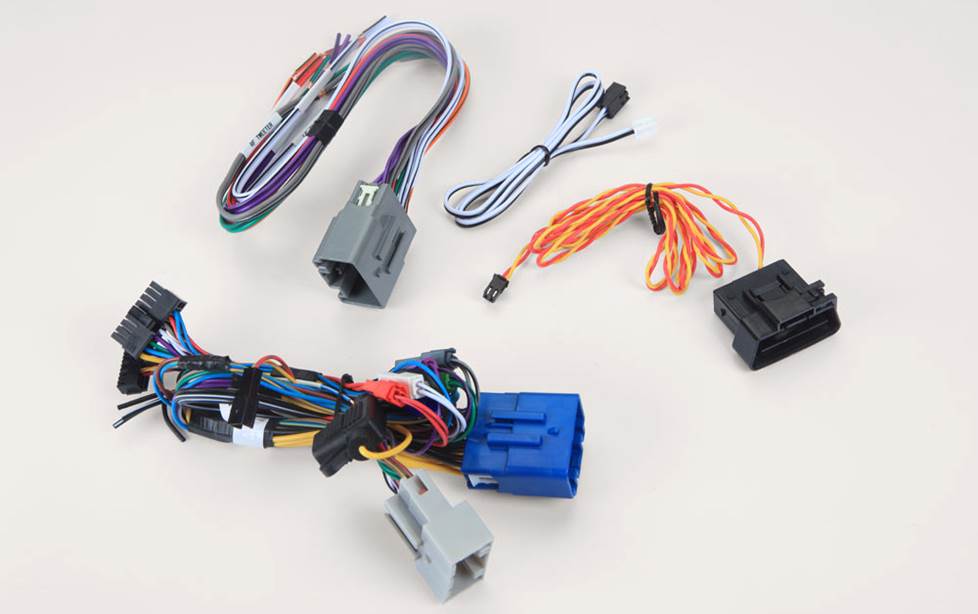
This iDatalink HRN-AR harness connects a Maestro AR amplifier replacement module to select 2011-up Ford vehicles
What you should do
If you know how to use audio test equipment, like a multimeter or an RTA, then you should have no trouble figuring out what you need for your amp installation. On Crutchfield's website you'll find amplifiers, vehicle-specific amplifiers, sound processors for factory radios, and the vehicle-specific hardware needed to install an amplifier.

Crutchfield Technical Support Specialist Jeffrey — ready to help.
For everyone else, contact us to get the right gear. Crutchfield Advisors have access to a vast database of vehicle information that includes what kind of factory system is in your vehicle, what aftermarket speakers and amplifier will fit, and what interface device, if any, will work best to produce the best-sounding aftermarket system for you and your car. Plus, when you buy your gear from Crutchfield, you get access to our legendary free tech support to help you build and enjoy your perfect sound system.
_mobile.jpg)



Bobfrank from Altoona
Posted on 4/14/2026
You guys are awesome.
Caden
Posted on 1/10/2025
So I have a aftermarket radio, and after market speakers, how would I connect a amp to the after market radio to give me more watts and RMS for better sound quality.
Buck Pomerantz from Crutchfield
on 1/11/2025
Jack from Boyceville
Posted on 11/10/2024
How do you bypass the factory amp if the amp is blown n no sound is coming out don't need amp n have a after market radio in it
Buck Pomerantz from Crutchfield
on 11/11/2024
Trevor from Gladstone
Posted on 7/20/2024
So I have a 2013 dodge charger with the alpine sound system, and I have installed 2 12 inch subs in the back by tapping into the rear speakers with a like output converter. But it's not giving me enough added bass I was wondering what else I could do to get more bass from my subs bc I know they have way more to give
Buck Pomerantz from Crutchfield
on 7/29/2024
Justin from Providence
Posted on 5/2/2024
I have a 03 Toyota Camry with the JBL system and I want to replace the factory amp what do I need to do
Buck Pomerantz from Crutchfield
on 5/3/2024
John
Posted on 5/1/2024
I'm looking to have my speakers replaced and amplified in my 2022 Kia Forte, I want to keep the radio because of Apple CarPlay, but I want to upgrade the speakers and the sound. What are ways I can make the sound louder and what tools do I need?
Buck Pomerantz from Crutchfield
on 5/2/2024
Jordan from Damascus
Posted on 10/10/2023
2017 Kia Sportage (w/ nav and 7" screen) Looking for a "scenario 3" factory pass through cable that adds 1 or 2 rca pairs
Buck Pomerantz from Crutchfield
on 10/11/2023
Rob from South Florida
Posted on 10/3/2023
Hello all, thanks for the great support & advice provided through the years! My situation is that I have a 2019 BMW X3 with the stock HiFi system that I enjoy, except for the low end - it needs a fuller bass sound. I've looked at the pricier options of replacing my factory under-seat "subs" through Bvsound or Bmrtch. Although they seem to be more plug & play, I'm not sure they'd give me the fuller, deeper bass sound that I want, even at that price. So I've purchased an Alpine PWE-S8 from you to add to the empty spare tire well in the back. (At my age I'm not looking to be heard from a block away, just want a richer bass sound that doesn't sound like it's coming from in front of me). What I'd like to confirm is whether I can use the left & right sub outputs from the factory amp as input to the self powered PWE-S8, even though that signal has already been amplified. I plan to use t-connectors to split the signal from the wires between the amp & the under-seat "subs". However it seems that this would result in a 'double amplified' signal and I'd like to make sure there won't be issues with this configuration or cause damage to my PWE-S8. I'd appreciate any guidance, warnings, & suggestions you can provide - thank you!
Buck Pomerantz from Crutchfield
on 10/3/2023
Carlos Acevedo from Teaneck nj
Posted on 10/1/2023
Hello, currently have a 2023 Jeep Grand Cherokee Trailhawk 4Xe hybrid with the Alpine Audio. The stock audio sounds amazing, but lacks low end even with the factory sub. I have an Alpine MRV-M500 I would love to install with a 10 inch Alpine type R that I had in my previous car. I ordered the wire diagram from you guys but its for the L version of the JGC. Is there a location I can tap into the factory speaker wires using the speaker level input from the Alpine amp? Thanks for any info.
Buck Pomerantz from Crutchfield
on 10/2/2023
Colby
Posted on 6/14/2023
Hello. I have a 2015 veloster with the dimension system and want to install a 4 channel amp. I have a factory radio so there are zero pin outs on the stock head unit for speaker wire, all of it is running to the factory amp. What is the best way to go about installing my aftermarket amp? I have 9 wire, LOC's, RCA cables, and all of the necessary equipment, I am just wondering if I need a summing device to keep everything the same. If you have tips on how to make this install easy, please let me know by best plan of action. Thank you!
Buck Pomerantz from Crutchfield
on 6/15/2023